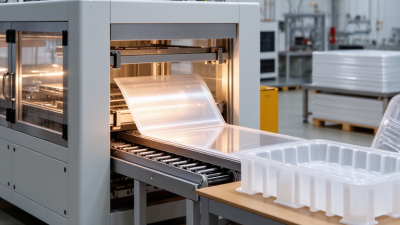
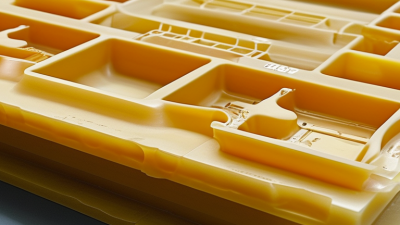
China Top 10 Vacuum Thermoforming Manufacturers
Vacuum thermoforming turns heated plastic sheet into practical parts: trays, covers, equipment housings, and protective packaging. The process can look straightforward. Consistent results are not. Sheet temperature, mold design, vacuum distribution, and cooling all affect wall thickness and surface detail. James L. Throne, a recognized thermoforming author, describes the basic method as “heating a thermoplastic sheet to its forming temperature, stretching it over a mold, and holding it there until it cools.” That sequence explains why experienced manufacturers invest in process control, not just machinery.
Market data offers useful context, but it needs careful reading. Grand View Research estimated the global thermoforming plastics market at about US$48.8 billion in 2023 and projected a 5.1% compound annual growth rate from 2024 to 2030. That figure covers thermoforming plastics broadly; it is not a vacuum thermoforming market estimate. Numbers need context. For buyers, the practical questions are more specific: Can a supplier hold tight tolerances across repeated runs? Can it show sample parts, material specifications, and quality checks? A glossy factory photo cannot answer those questions.
This China Top 10 Vacuum Thermoforming Manufacturers overview introduces companies through their capabilities, product focus, and manufacturing experience. It is a starting point, not a substitute for supplier audits or sample testing. Still, comparing real production details can reveal meaningful differences. A clear answer about tooling lead time may matter more than a polished brochure.
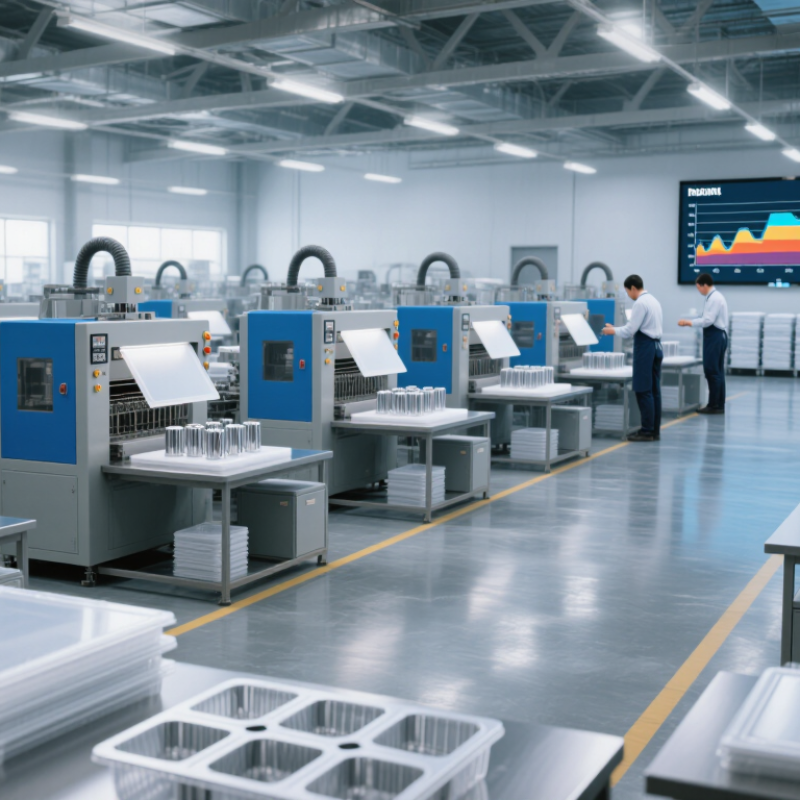
Vacuum Thermoforming Explained: Heating, Forming, Cooling, and Trimming
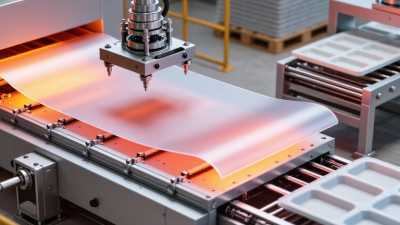
Vacuum thermoforming turns a flat thermoplastic sheet into a shaped part through controlled heating, forming, cooling, and trimming. The sequence sounds simple. The difficult work is matching sheet temperature to material thickness, mold geometry, and cycle time. A sheet may look evenly heated while its edges remain cool or its center begins to sag. Operators watch for changes in surface gloss and sheet movement, then adjust heater zones or heating time.
When the sheet becomes pliable, it is clamped over a mold. Vacuum draws it against the mold surface, including corners and shallow details. Small vents help remove trapped air, while generous corner radii can reduce thinning. Deep draws need particular attention: material stretches, and the finished wall may become thinner than expected. There is no single setting that suits every part. Even experienced teams sometimes need another trial.
Cooling stabilizes the shape before release. Removing a part too early can cause warping or spring-back, especially around broad, flat panels. After cooling, trimming removes the flange and creates clean edges or openings. Cut quality matters. Rough edges, dimensional drift, or excess material can signal problems earlier in the process, though trimming alone does not reveal every cause. Reliable production checks part thickness, fit, and appearance across repeated cycles, not just on one good sample.
Materials and Processing: ABS Sheet Forming at Roughly 150–180°C
ABS sheet forming depends on thickness, formulation, and how evenly heat reaches the sheet. A working range of roughly 150–180°C is a useful starting point, not a guaranteed setting. Measure the sheet temperature where possible; heater readings alone can mislead. Operators often look for a soft, even sag before applying vacuum. Small detail, big effect. A cool center may resist forming, while excess heat can cause bubbles, surface marks, or thin corners.
PlasticsEurope’s Plastics – the Fast Facts 2024 reports global plastics production of 413.8 million tonnes in 2023. That figure covers all plastics, not ABS, but it shows the scale of material processing behind formed components. For manufacturer comparisons, ask how temperature is checked across the sheet and whether trials cover different gauges. Mold geometry, heating time, and vacuum timing also affect the result. The 150–180°C range can be a useful reference, yet treating it as a fixed recipe is a mistake; even a repeatable setup may need adjustment when sheet batches vary.
How Vacuum Levels Near 0.08–0.10 MPa Affect Part Detail and Cycle Time
At a standard atmosphere of 101.325 kPa, a vacuum reading of 0.08 MPa leaves roughly 21 kPa of absolute pressure; 0.10 MPa approaches a near-full vacuum. The reference value comes from NIST’s standard-atmosphere data. In practice, leaks, altitude, and pump capacity change the pressure available at the mold.
That pressure difference can affect how closely a heated sheet follows fine ribs, shallow lettering, and corner radii. Stronger vacuum may improve contact, but it cannot fix a sheet that is too cool or poorly vented. SPE thermoforming guidance also treats material temperature, mold design, and vacuum as interacting process variables, not independent settings. Details matter.
Higher vacuum does not automatically shorten every cycle. A sound system can evacuate the cavity quickly, while restricted ports or a small pump may add delay. Track pressure at the mold, not only at the pump. Compare cycle times on the same part, material, and sheet temperature; otherwise, the result is hard to interpret. A slight wrinkle in the data is normal. Operators sometimes chase a deeper vacuum when the real issue is uneven heating.
Vacuum Thermoforming: How 0.08–0.10 MPa Vacuum Affects Part Detail and Cycle Time
Pressure values below are calculated at standard sea-level atmospheric pressure (101.3 kPa). Vacuum differential is the pressure drop below atmosphere; absolute cavity pressure is the remaining pressure.
What it means: A greater vacuum differential lowers cavity pressure, increasing the pressure available to draw heated sheet into fine mold features. Reaching the target vacuum may support better detail, but cycle-time effects depend on the pump, plumbing, mold venting, material, and part geometry; vacuum level alone does not determine total cycle time.
China’s Top 10 Vacuum Thermoforming Manufacturers by Products and Markets
A China top-ten comparison is most useful when it maps products to markets, not just factory size. Some manufacturers focus on thin-gauge trays for food and electronics; others make thicker protective shells, appliance liners, or reusable industrial inserts. Buyers should compare sheet compatibility, forming depth, trimming accuracy, and tooling flexibility. A sample part tells more than a polished catalogue. Small details matter.
Market figures offer context, but not a ready-made supplier ranking. Allied Market Research estimates the global thermoformed plastics market at about US$47.9 billion in 2022, with a projected value of US$69.3 billion by 2032. Its broad category includes several forming processes, so it does not measure China’s vacuum-thermoforming segment alone. That distinction is easy to miss. For a practical shortlist, assess each supplier’s product mix, export experience, and ability to serve food packaging, medical packaging, automotive, or consumer-goods customers. Then check actual tolerances, lead times, and material options against your drawing. A low quote can conceal limited tooling support; even experienced buyers sometimes discover this late.
Comparing Manufacturers: Sheet Thickness, Capacity, Quality Systems, and Lead Times
When comparing vacuum thermoforming manufacturers in China, start with the sheet thickness each facility can process consistently, not just its advertised maximum. A machine may accept a thick sheet, while deep draws or tight corners still produce uneven walls. Ask for sample parts made with your material and similar geometry. Measure wall thickness near corners and across the base. For thin packaging, check whether clamping and heating controls prevent wrinkles. For thicker panels, confirm trimming methods and tooling capacity. Small differences matter.
Capacity figures need context. Ask how many machines are available for your part size, and whether quoted output assumes one shift or continuous production. Quality systems are more than certificates; request inspection records, material traceability, and clear procedures for handling defects. A video inspection helps, but it cannot replace reviewing actual parts. Lead times should separate tooling, first-article approval, and repeat production. Get each stage in writing, including time for revisions. One detail is easy to miss: shipping and sample approval can add days. Build in a buffer. Factory schedules can change, and a neat spreadsheet will not capture every delay.