
Which Vacuum Thermoforming Machine Is Best in 2026?
Choosing the best vacuum thermoforming machine in 2026 starts with the part, not the showroom. A clear plastic cover, a deep tray, and a thick automotive panel place different demands on heating, forming, and trimming. The right machine should suit your material, mold size, production volume, and required detail. Bigger is not automatically better.
Dr. James L. Throne, author of Technology of Thermoforming, explains the process as heating a thermoplastic sheet and forming it over a mold. His work offers a useful reminder: temperature, pressure, and timing must work together. In practice, that means checking how evenly the heater warms the sheet, how reliably the vacuum pulls it against mold corners, and how consistently the system repeats each cycle. Ask for sample parts made with your material. Inspect thin spots, sharp edges, and surface marks.
Then compare machine types, controls, tooling needs, energy use, and service support. A compact unit may be a sensible fit for short runs. A larger, automated line may reduce handling in steady production. But automation cannot fix a poor material match or uneven heating. It is easy to overlook that.
This guide compares key machine features and explains which applications they suit. It also considers operating costs and questions to ask suppliers. No single machine wins every job. Your best choice may be less impressive on paper, yet more dependable on the factory floor. That distinction deserves a closer look.
How Vacuum Thermoforming Machines Work
Which Vacuum Thermoforming Machine Is Best in 2026?
How Vacuum Thermoforming Machines Work
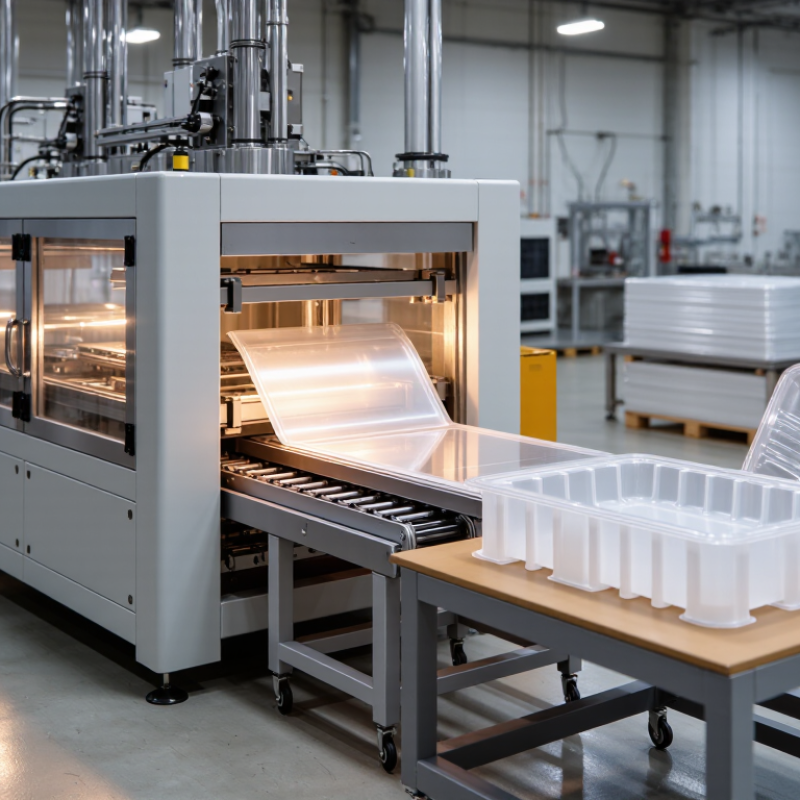
A vacuum thermoforming machine shapes a heated plastic sheet over a mold. The operator clamps the sheet, then heaters soften it until it bends evenly. Temperature and heating time depend on the plastic type and sheet thickness. Too little heat can leave corners thin; too much may cause sagging. That is the cycle.
Once softened, the sheet moves over or above the mold. A vacuum pump draws air through small holes or channels, pulling the sheet tightly against the mold’s surface. Small vents matter. They help capture details around ridges, shallow lettering, and edges. The mold may be placed inside a chamber, or the sheet may be lowered onto it. Machine layout affects handling, but the forming principle stays similar.
The formed part cools while held against the mold, then releases for trimming. In practice, cooling can take longer than expected, especially with thick sections. A clean mold and steady vacuum help produce repeatable results, though they cannot fix poor heating. Operators often check for webbing, uneven walls, and soft corners on early parts. The first setting is rarely perfect; material batches and shop conditions can shift the result.
| Machine Configuration | How It Works | Typical Applications | Advantages | Considerations |
|---|---|---|---|---|
| Manual benchtop former | The operator positions and clamps a sheet, heats it, moves it over a mold, and applies vacuum to pull the softened plastic against the mold. | Prototyping, demonstrations, small parts, and low-volume production. | Compact setup and relatively simple operation; useful for testing designs and materials. | Production rate and repeatability depend heavily on operator skill. Check the usable forming area and heating capacity before purchase. |
| Semi-automatic single-station machine | Heating and vacuum forming take place at one station, with some steps automated and others completed by an operator. | Short production runs, custom packaging, trays, covers, and product housings. | Offers more process control than a basic manual unit while retaining flexibility for frequent product changes. | Loading, unloading, trimming, and other handling may still limit output, depending on the machine and workflow. |
| Automatic single-station machine | Controls coordinate sheet clamping, heating, forming, and release at one forming station; the mold and sheet are shaped using vacuum. | Repeat production of parts with consistent geometry, including panels, liners, and formed packaging components. | Can improve cycle consistency and reduce manual handling when the process is properly set up. | Confirm that the control system, heater zones, mold space, and material handling suit the intended part and production volume. |
| Continuous or roll-fed former | Plastic film or sheet is fed from a roll, heated, formed over successive tooling positions, and advanced through the production line. | High-volume production of thin-gauge packaging, such as trays and containers. | Designed for continuous output and efficient use of roll stock in suitable applications. | Best suited to compatible materials and repeatable designs; tooling, line integration, and downstream cutting are important planning factors. |
| Heavy-gauge industrial former | A larger sheet is heated until formable, then drawn over or into a mold by vacuum; additional pressure-assist options may be available on some machines. | Large covers, vehicle and equipment panels, enclosures, and other substantial formed parts. | Can accommodate larger parts and thicker sheet than many benchtop systems, subject to the machine’s specifications. | Requires careful assessment of heater capacity, forming area, mold depth, cooling, material handling, and available floor space. |
| Core process principle | A heater softens a thermoplastic sheet. The sheet is placed over or against a mold, and air is evacuated from the space between them so atmospheric pressure pushes the sheet toward the mold surface. | Applies across vacuum thermoforming machine types. | Explains why mold venting, sheet temperature, vacuum flow, and timing all affect the formed part. | Vacuum forming uses a pressure difference; it does not pull with more than approximately one atmosphere of pressure difference at sea level. |
| Selection criteria | Match the machine to the part’s dimensions, material, sheet thickness, mold depth, production volume, and required cycle consistency. | Useful when comparing machines for a new or changing application. | Testing with the intended material and mold can help verify part quality and process suitability. | Machine capabilities vary. Verify the manufacturer’s stated forming area, material range, heater configuration, vacuum system, and cycle requirements. |
| Note: “Best” depends on the application. Machine capabilities and achievable output vary by design, tooling, material, part geometry, and operating conditions; confirm specifications with the equipment supplier before selecting a machine. | ||||
Related Posts
-

How to Choose Vacuum Forming Plastic for Global Sourcing?
-
How to Vacuum Form Plastic in 2026?
-
How Does the Thermoforming Process Work?
-
Revolutionizing Manufacturing: How Plastic Vacuum Forming Machines Boost Efficiency by 30% in 2023
-
Why Vacuum Thermoforming is Essential for Modern Manufacturing?
-
How to Choose a Vacuum Forming Supplier in 2026