Why Choose a Plastic Vacuum Forming Machine?
Why choose a plastic vacuum forming machine in a market demanding speed, consistency, and responsible material use? The answer often begins with practical production economics. This equipment heats a plastic sheet until it softens, then draws it over a mould using controlled vacuum pressure. The process can create trays, protective packaging, automotive panels, and equipment housings with relatively simple tooling. For short and medium production runs, aluminium, resin, or composite moulds may reduce development time compared with injection moulding tools.
The scale of plastics use remains significant. PlasticsEurope’s Plastics—The Fast Facts 2024 reported global plastics production of 413.8 million tonnes in 2023. However, the OECD’s Global Plastics Outlook found that only 9% of plastic waste was recycled in 2019. These figures make material selection and process control more important, not less. A modern plastic vacuum forming machine can support thinner sheet designs, nesting strategies, and the use of recyclable or recycled-content materials. Results still depend on heating zones, plug assistance, vacuum timing, and operator experience. Small temperature errors can produce webbing around corners or uneven wall thickness.
It is not a perfect answer. Trim waste remains, and complex shapes may require secondary assembly. Yet, manufacturers can measure sheet yield, inspect thickness at critical points, and document each batch. Industry research from Grand View Research continues to identify thermoforming as a growing manufacturing segment, driven by packaging, healthcare, and transportation applications. Those market forecasts are useful, but they should not replace production trials. A careful buyer should compare energy use, mould life, service support, guarding, and applicable safety requirements before investing. The machine matters. Process discipline matters more.
What Is a Plastic Vacuum Forming Machine?
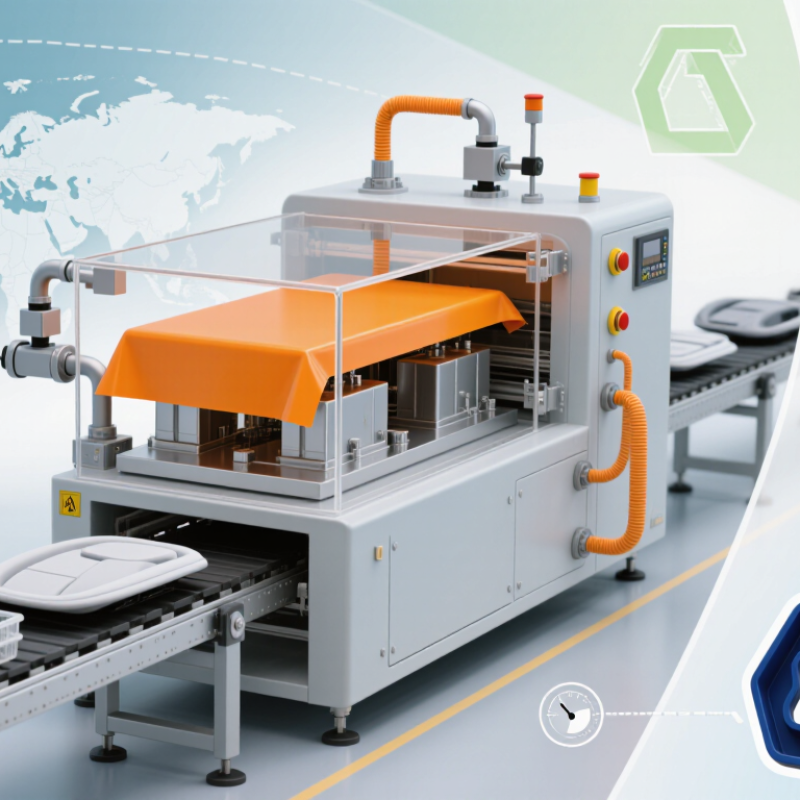
A plastic vacuum forming machine shapes heated thermoplastic sheets over a mold. The process is simple, but accuracy depends on every stage. Heating softens the sheet, while a vacuum pulls it tightly against the mold surface. After cooling, the formed part is trimmed to its final dimensions.
A typical machine includes heating zones, a clamping frame, a vacuum pump, and a cooling system. Operators can produce trays, covers, housings, displays, and protective inserts with relatively low tooling costs. This flexibility explains its appeal for short and medium production runs.
According to PlasticsEurope’s Plastics—The Fast Facts 2024 report, global plastics production reached 413.8 million tonnes in 2023. That volume increases pressure to reduce waste and improve material efficiency. Vacuum forming can support this goal when operators control sheet thickness, nesting, and offcut recovery. However, poor temperature settings may create thin corners, webbing, or uneven surfaces. Small errors become visible under bright inspection lights.
Grand View Research has estimated steady growth in the global thermoformed plastics market through 2030, supported by packaging, medical, and industrial applications. Yet the machine alone does not guarantee reliable output. Mold ventilation, cooling time, and trimming accuracy require documented procedures. Recycled or multilayer sheets may also behave differently during heating. Trial runs remain necessary, even when the design looks straightforward. That is where planning can improve.
How Does the Vacuum Forming Process Work?
Why Choose a Plastic Vacuum Forming Machine?
Plastic vacuum forming begins with a flat thermoplastic sheet. The sheet is clamped inside the forming machine. A heating station warms it evenly from above and below. The sheet softens. An operator watches its temperature, sag, and surface appearance. Timing matters. If the plastic remains too cool, it may resist the mold. If it becomes too hot, thin areas can stretch excessively. The softened sheet moves over a prepared mold. A vacuum pump removes air between the sheet and mold. Atmospheric pressure then presses the plastic tightly against every contour. Ribs, curves, and shallow details usually form clearly when the mold is designed correctly.
After forming, the part cools while staying under controlled pressure. Cooling helps the plastic hold its shape. Trimming removes the flange and creates the required edge. Technicians inspect wall thickness, corners, holes, and surface marks. Small wrinkles often reveal uneven heating or trapped air. The process is not foolproof. A practical adjustment may involve changing heat zones, vacuum timing, or cooling duration. Each material responds differently, so production settings should be tested rather than guessed. That uncertainty deserves attention, especially when consistent dimensions are important. With documented checks and trained operators, vacuum forming can produce lightweight parts efficiently, while keeping tooling and material use practical.
Why Choose a Plastic Vacuum Forming Machine?
Vacuum forming heats a thermoplastic sheet until it becomes flexible, places it over a mold, and uses vacuum pressure to draw the sheet tightly against the mold surface. After cooling, the formed part is released and trimmed.
The chart shows typical sheet-forming temperature windows for commonly thermoformed plastics. Actual settings depend on sheet thickness, mold design, heating method, and cooling conditions. A vacuum forming machine provides controlled heating, consistent vacuum application, and repeatable production results.
Which Materials and Products Can It Form?
A plastic vacuum forming machine shapes heated thermoplastic sheets over a mould using controlled air pressure. Its real value appears in material choice, not machine size. PET and recycled PET suit clear trays, blister-style packs, and protective covers. HIPS forms rigid food-service trays and display inserts with clean detail. ABS handles tougher housings, instrument panels, and durable equipment shells. PP offers chemical resistance, although its processing window can be less forgiving. PVC can form well, but compliance and end-of-life requirements need careful review.
The product range is broad: bakery trays, medical-device packaging, refrigerator liners, lighting reflectors, and vehicle interior panels. Smithers’ The Future of Thermoforming to 2028 identifies packaging as the dominant application area. This reflects strong demand for lightweight, formed components. PlasticsEurope’s Plastics—The Fast Facts 2024 reports 413.8 million tonnes of global plastics production in 2023. That figure shows the scale, but not automatic sustainability. The OECD Global Plastics Outlook reports that only 9% of plastic waste was recycled globally in 2019. Mono-material designs deserve preference where practical. Details matter.
On the shop floor, sheet temperature, plug assistance, and mould venting determine sharp corner definition. A tray may look simple, yet deep draws can thin the base and weaken snap-fit edges. Keep wall thickness, draft angles, and trimming allowances realistic. Short cycles matter. Still, a first mould is rarely perfect; warpage, whitening, or uneven cooling may demand another test. That imperfection is useful data, not merely a defect. Test before scaling. Select the machine after measuring the part, material, draw depth, and expected production volume.
What Are the Main Benefits of Vacuum Forming?
Why Choose a Plastic Vacuum Forming Machine?
What Are the Main Benefits of Vacuum Forming?
Vacuum forming offers practical benefits when a product needs a shaped plastic shell, tray, cover, or display component. A heated thermoplastic sheet softens over a mold, while vacuum pressure pulls it tightly against the surface. The result is fast, repeatable shaping with relatively simple tooling. It can reduce development costs, especially for short and medium production runs. Experienced operators also notice problems quickly. Uneven cooling, webbing, and thin corners often reveal process issues. It is not magic, though. Mold design still matters.
One major benefit is design flexibility. Engineers can produce broad curves, recessed details, ventilation openings, and lightweight hollow forms. Formed parts often weigh less than comparable molded components. This can simplify handling and reduce material use. Tool changes are usually faster than with expensive production molds. That makes vacuum forming useful for prototypes, custom enclosures, packaging inserts, and protective covers. Skilled technicians check sheet temperature, vacuum timing, draft angles, and wall thickness during trials. Small adjustments can prevent costly rejects.
The method also supports consistent production when operators measure each batch carefully. Suitable plastics may provide impact resistance, clarity, chemical durability, or outdoor performance. However, thickness can vary around corners, and deep shapes may require plugs or pre-stretching. Attractive first samples can still fail after repeated handling. Material choices are sometimes too optimistic. Testing under real heat, load, and cleaning conditions remains essential. Faster production helps, but uncontrolled speed creates waste.
How Should You Choose the Right Machine?
Choosing a plastic vacuum forming machine starts with the part, not the machine’s advertised capacity. Measure the largest mold, sheet thickness, forming depth, and expected production rate. A machine with a 900 × 600 mm working area may still fail if the mold needs generous edge clearance. Confirm compatible materials, including ABS, PETG, HIPS, or acrylic. Each plastic heats and stretches differently. Ask for heating curves and test samples, not vague promises. Reliable suppliers should explain tolerances, maintenance intervals, and safety controls clearly.
Review the heater layout carefully. Independent heating zones can reduce thin corners and uneven wall thickness. Check whether the vacuum pump reaches stable pressure quickly, especially for detailed molds. Pneumatic clamping should hold the sheet evenly without marking its surface. I once focused too heavily on cycle speed and underestimated mold-change time. That mistake increased labor costs. Now I compare complete cycles, including loading, cooling, trimming, and cleaning. Also inspect the controls. Simple settings are useful, but data logging helps repeat quality across shifts.
Tips: Request a trial using your actual sheet and mold. Measure wall thickness at corners, not only the center. Check noise, access space, and spare-part availability. Leave room for future tooling. A cheaper machine may become expensive when upgrades are frequent. Keep records. Your best choice should match today’s process while allowing realistic growth.