For global buyers, product selection often begins with a practical question: can one tray manage larger spaces without creating new problems? Extra large plastic drip trays help protect floors, shelves, benches, and transport areas from excess water, soil, and fertilizer residue. They are useful in nurseries, commercial greenhouses, garden centers, warehouses, and large indoor growing projects. Fit matters.
A reliable tray should match the container footprint, drainage pattern, load requirements, and available storage space. Buyers should examine wall thickness, surface stability, rim strength, and resistance to moisture, sunlight, and routine cleaning. Product drawings and material specifications are valuable here. So are sample checks. A tray may look strong online but flex under several heavy pots. That gap matters.
Experienced purchasing teams also review packaging, nesting efficiency, shipping dimensions, and quality-control records. These details can influence landed cost more than the unit price. Suppliers should provide clear measurements, production information, and consistent communication throughout the order. Independent testing may be appropriate for demanding applications, especially when hygiene, repeated handling, or outdoor exposure is involved. Compliance requirements also vary by destination, so buyers must confirm local standards before purchase. No tray solves every drainage challenge. However, a carefully specified product can reduce cleanup, protect working surfaces, and improve daily handling. The best choice balances capacity, durability, logistics, and realistic operating conditions rather than relying on impressive claims alone.
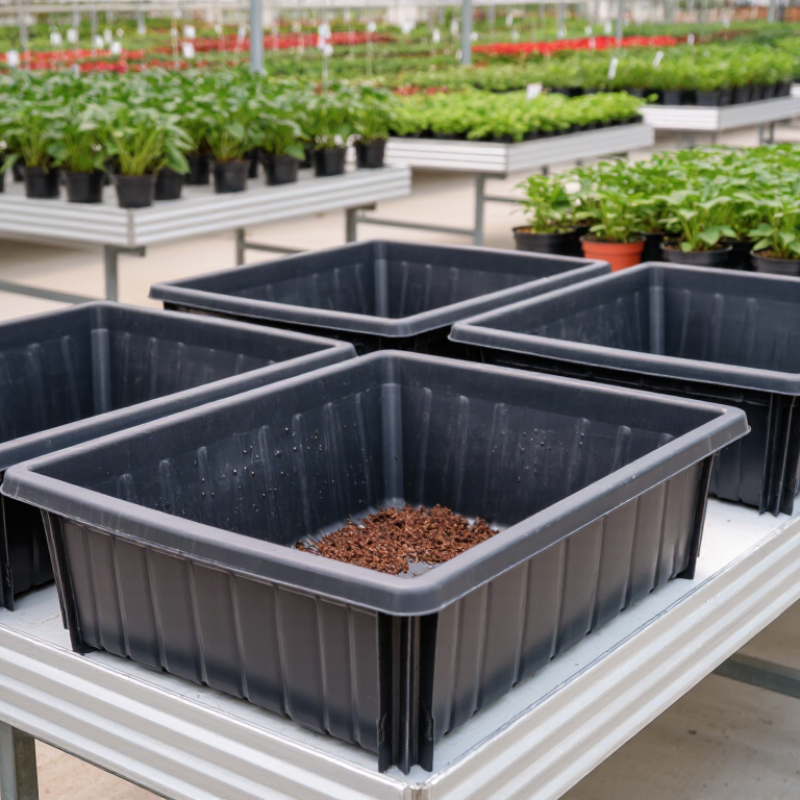
Extra large plastic drip trays are containment platforms placed beneath many pots, racks, equipment, or processing areas. Their raised edges collect runoff, spilled liquids, and excess irrigation water. “Extra large” has no universal global measurement. Buyers should check length, width, depth, wall height, and usable capacity before ordering.
In practical use, a tray may need to hold several hundred litres, depending on its footprint and liquid depth. A reinforced base helps prevent flexing during lifting or uneven loading. Textured surfaces can improve grip, but they may make cleaning slower. This detail is often overlooked. The FAO’s 2023 agriculture report states that farming accounts for more than 70% of global freshwater withdrawals. Proper liquid collection can support more controlled irrigation, although a tray cannot replace water-management planning.
Material selection also matters. Polyethylene and polypropylene are common because they resist moisture, impact, and many routine cleaning chemicals. However, sunlight, temperature changes, and heavy loads can shorten service life. The United Nations Environment Programme reported in 2023 that plastic pollution could be reduced by 80% by 2040 through reuse, recycling, and better design. That finding encourages buyers to consider reusable construction and end-of-life handling. A common mistake is choosing the largest tray available. Bigger is not always better. Check drainage points, rack clearance, forklift access, and local recycling requirements before purchase.
Extra large plastic drip trays help protect floors and work areas from leaks, spills, and routine maintenance mess. Their wide surface catches oil, water, cleaning fluids, and loose debris before these materials spread. A raised rim adds another barrier around the spill zone. This matters in workshops, warehouses, laboratories, and equipment rooms.
From practical use, tray size is only one part of reliable protection. Buyers should check the tray’s load capacity, wall thickness, surface texture, and chemical compatibility. A heavy container can deform a weak base and create a new leak path.
Textured surfaces may improve grip, while smooth interiors usually make cleaning easier. Some trays include handles or drain fittings, but these features need careful inspection.
I have seen large trays protect concrete floors during equipment servicing, especially beneath pumps and storage containers. They also reduce slippery patches around busy workstations. However, they cannot replace proper storage or spill response procedures. They may flex on uneven floors, and very large models can be difficult to move when full. That weakness is easy to overlook. Measuring the work area first can prevent awkward placement and blocked walkways. Testing a small quantity under real conditions is also sensible, particularly when temperature, fluid type, and handling frequency vary.
Extra large plastic drip trays must handle more than spilled water. They often support heavy pots, soil, and repeated movement across warehouses or patios. In my purchasing tests, polypropylene performed well because it stayed light, stiff, and resistant to common fertilizers. High-density polyethylene offered better impact resistance, especially in colder storage areas.
Material thickness matters more than a glossy surface. A tray with reinforced ribs can resist bending under uneven loads. However, extra thickness increases shipping weight and storage costs. This trade-off is easy to overlook. I once selected a rigid tray that arrived safely but occupied too much container space. The design was strong, but not efficient.
UV resistance is essential for outdoor buyers. Ask for verified UV stabilizers rather than relying on vague durability claims. Smooth inner walls make cleaning easier, while textured bases can reduce pot movement. Raised edges should contain runoff without blocking drainage channels. Nesting features also help reduce freight volume between uses. Recycled plastic may lower environmental impact, but its color and consistency can vary. Buyers should inspect sample batches before placing large orders. A small crack around a drainage corner can become a serious failure during handling. Clear dimensions, load testing, and material documentation make supplier comparisons more reliable.
Why Choose Extra Large Plastic Drip Trays for Global Buyers?
Extra large plastic drip trays are widely used in commercial nurseries and greenhouse production. They sit beneath plant benches, propagation racks, and large containers. Water spreads fast. These trays capture runoff, reduce slippery floors, and help workers collect reusable irrigation water. The USDA’s 2022 Census of Horticultural Specialties reported 18.3 billion dollars in U.S. horticultural sales, showing the scale of professional growing operations. Large facilities need trays that handle repeated watering without cracking or warping.
They are also common in indoor farms, garden centers, warehouses, and landscape supply areas. Indoor farms often place trays beneath stacked growing systems, where a small leak can affect several levels. Garden centers use them under trees, shrubs, and oversized pots during transport or display. The FAO reports that agriculture accounts for roughly 70% of global freshwater withdrawals. Better runoff control can support more careful water management, although trays alone cannot solve irrigation waste. Some buyers choose trays that are too shallow. That mistake is easy to miss.
Tips: Measure the full container footprint, not only the pot base. Check load capacity, drainage outlets, UV resistance, and nesting space before ordering. A slightly deeper tray may perform better outdoors, but it can become heavy when filled. Clearance also matters under benches and racks. Recheck these details with local workers before purchase.
The chart uses a practical 1–5 suitability score based on the need for wide-area water capture, leak protection, drainage control, and repeated cleaning. Extra large plastic drip trays are commonly used under greenhouse benches, nursery racks, hydroponic systems, propagation tables, indoor growing equipment, and commercial plant displays. The score is a use-case assessment, not a market-share estimate.
Choosing a supplier for extra large plastic drip trays requires more than comparing unit prices. Tray dimensions, resin quality, load capacity, and production consistency directly affect warehouse safety and daily handling. Request a technical sheet showing length, width, wall thickness, weight tolerance, and drainage design. A 1200-millimeter tray may look strong, yet thin corners can crack under stacked containers.
Ask how the supplier controls raw materials and molding conditions. Recycled content may reduce cost, but it can also change stiffness and surface quality. Confirm the percentage, source, and test method in writing. Request samples from regular production, not specially selected pieces. Place them on a flat floor, add realistic weight, and inspect bending after several days. Small flaws matter.
Check the supplier’s factory experience with export packaging and oversized cargo. Confirm pallet dimensions, container loading plans, moisture protection, and replacement procedures for damaged goods. Independent inspection before shipment can verify quantities, dimensions, color consistency, and visible defects. Certificates are useful, but they should match the actual material and destination requirements. A document alone proves little.
Communication reveals reliability. Does the supplier answer technical questions clearly, or only repeat sales language? Clarify lead times, mold ownership, payment stages, and quality claims before ordering. Keep every specification in the purchase contract. A perfect checklist does not exist. I would still test a larger batch, because one successful sample can hide uneven production.