
What Is a Grain Silo and How Is It Used?

A grain silo is more than a tall metal container beside a farm. It is a controlled storage system for wheat, corn, barley, rice, and other harvested grains. Its walls protect grain from rain, pests, sunlight, and sudden temperature changes. Inside, aeration fans move cool air through the grain mass. Temperature cables help operators detect hot spots before spoilage spreads. Moisture monitoring is equally important. Even a small increase can encourage mold, insects, and grain deterioration.

Dr. Dirk Maier, a recognized grain-storage specialist, states, “Safe storage depends on controlling grain condition, not merely enclosing it.” This principle explains how a silo is used. Farmers load clean, properly dried grain through an upper conveyor. They inspect the grain during storage and adjust airflow when conditions change. Unloading systems later move grain toward trucks, mills, animal-feed facilities, or export terminals. The process looks simple. It is not always simple.

A practical grain sild guide should also discuss cleaning, inspection, and worker safety. Dust can collect around conveyors and create serious operational hazards. Poor maintenance may damage fans, sensors, or discharge equipment. Some operators focus heavily on capacity and overlook daily monitoring. That is a mistake worth reconsidering. A well-designed silo saves space, protects quality, and supports better selling decisions. However, no silo can rescue grain that entered wet, contaminated, or poorly inspected. The best results come from combining sound engineering with disciplined management.
What Is a Grain Silo and How Is It Used?

Definition and Basic Structure of a Grain Silo

A grain silo is a vertical storage structure designed to hold dry grain safely for a controlled period. Its main job is to protect kernels from moisture, pests, weather, and avoidable quality loss. Most silos use a round body because this shape distributes grain pressure evenly against the walls. The structure may be built from galvanized steel, reinforced concrete, or other engineered materials. Size varies widely.

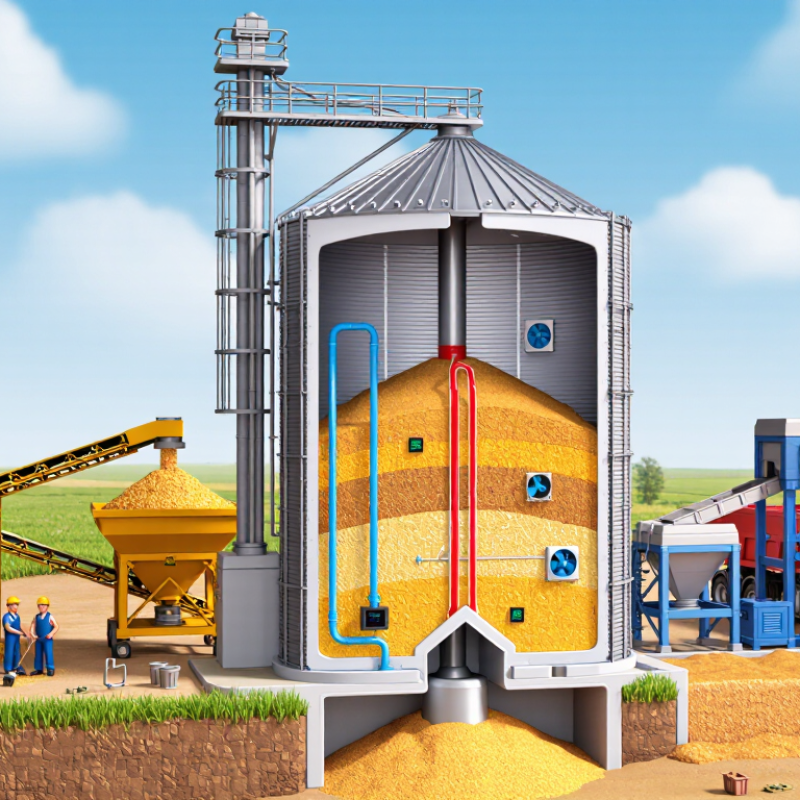
The basic structure has several connected parts. A strong foundation supports the full load and limits movement on weak or uneven ground. The cylindrical wall contains the grain, while the roof sheds rain and supports access equipment. Inside, an aeration floor or duct system moves cool, dry air through the grain mass. Temperature cables can reveal hot spots before spoilage becomes visible. At the bottom, a hopper or sloped floor guides grain toward an outlet. Conveyors, elevators, and gates control filling and discharge.

In daily operation, operators check moisture, temperature, airflow, and residue around openings. Leaks spread quickly. A clean-looking silo is not automatically safe; hidden condensation may already affect the center. Ventilation must match the grain condition, local climate, and loading depth. One practical weakness deserves attention: readings from one sensor cannot represent every layer. Regular inspection, calibrated instruments, and careful records support better decisions, although no storage system removes all risk.

How Grain Is Stored and Managed Inside a Silo

What Is a Grain Silo and How Is It Used?

A grain silo is more than a tall metal container. It is a controlled storage system that protects grain from moisture, heat, insects, and physical damage. Inside, grain moves through several management stages. Workers inspect incoming loads, measure moisture, and remove foreign material before filling the bin. Grain should be cooled gradually with aeration fans. This reduces hot spots, condensation, and insect activity.

Temperature cables provide an early warning. A small warm area can signal mold growth or trapped moisture. Operators usually check readings regularly, especially after loading and during seasonal temperature changes. Safe moisture levels vary by crop, storage time, and local conditions. Corn may require about 15% moisture for longer storage, while wheat often needs around 13% to 14%. These are working targets, not universal guarantees.

Small errors matter.

The Food and Agriculture Organization reported that about 14% of food is lost between harvest and retail worldwide in 2019. Good silo management can reduce part of this loss, but it cannot correct poor harvesting or damaged grain. The USDA Grain Inspection Handbook emphasizes sampling, grading, and condition checks throughout handling. Operators may also rotate grain, clean discharge equipment, and record every treatment and inspection. Even experienced teams can miss a hidden wet layer. That uncomfortable possibility deserves attention. Regular records, calibrated sensors, and hands-on checks make storage decisions more reliable.

Types of Grain Silos and Their Main Differences

What Is a Grain Silo and How Is It Used?

Types of Grain Silos and Their Main Differences

Grain silos are storage structures that protect harvested grain from moisture, pests, and temperature changes. Their design affects loading speed, unloading efficiency, maintenance, and storage capacity. Flat-bottom silos suit large-volume, long-term storage. They usually need mechanical equipment to remove remaining grain from the floor. Hopper-bottom silos have sloped floors, allowing grain to flow out more easily. This design reduces manual cleaning and supports faster batch handling.

Tower silos provide vertical storage where land is limited. Their height can improve gravity-fed movement, but construction and access systems may cost more. Some facilities use airtight silos to limit oxygen and slow grain deterioration. These systems require careful sealing and pressure control. A silo may appear efficient on paper, yet perform poorly during wet seasons. No single type works best for every farm or grain facility.

Tips: Check moisture before storage, and inspect grain temperature regularly. Keep vents, seals, ladders, and discharge systems clean. Avoid filling a silo unevenly, because pressure can build against its walls. Record inspection dates and grain conditions. Small mistakes matter. When selecting a silo, compare local climate, grain type, cleaning needs, expected volume, and available handling equipment. Professional engineering advice is valuable, especially for foundations and structural loads.

What Is a Grain Silo and How Is It Used?

Grain silos are enclosed structures used to store, protect, aerate, and unload crops such as wheat, corn, barley, and rice. The chart compares representative storage capacities for three common silo types.

Flat-bottom silos are commonly used for large, long-term commercial storage. Hopper-bottom silos have a conical floor for easier gravity unloading and are often used for farm storage or shorter-term handling. Tower silos use vertical space efficiently and are suitable where land area is limited. Capacities vary according to diameter, height, structural design, and local operating requirements.

Key Equipment Used for Silo Loading and Unloading

A grain silo stores harvested grain in a controlled vertical space. Its loading and unloading systems determine how safely and efficiently the grain moves. During loading, a bucket elevator often lifts grain from ground level to the silo roof. A belt or chain conveyor then carries it across the facility. A distribution spout directs grain into the correct bin. It should reduce impact, dust, and grain damage.

Unloading begins at the hopper, where gravity guides grain toward an outlet. Slide gates regulate the flow. Screw conveyors work well for short, controlled movements. Chain conveyors handle larger volumes over longer distances. Pneumatic systems can move grain through enclosed pipes, but they require careful pressure control. Rotary valves may support metered discharge. Dust collectors capture fine particles near transfer points. Level sensors and temperature cables help operators detect uneven filling or overheating.

Small details matter. A misaligned conveyor can spill grain beneath the equipment. A blocked screen can slow the entire unloading line. During inspections, technicians should check bearings, belts, gates, seals, and emergency stops. Power must be isolated before clearing a jam. That step is easy to skip. It should not be. Clean transfer areas also reduce dust buildup and slipping hazards. No layout is perfect. Even a well-designed silo may need slower loading when grain contains excess moisture, and operators should adjust settings instead of trusting automatic controls blindly.

What Is a Grain Silo and How Is It Used? - Key Equipment Used for Silo Loading and Unloading

Grain Silo Systems and Typical Handling Equipment
Category Equipment or Silo Feature Primary Function Typical Capacity or Range Important Operating Considerations
Silo Definition Grain silo Stores dry bulk grains such as wheat, maize, rice, barley, and soybeans while protecting them from weather and contamination. Common farm and commercial silos range from tens to several thousand tonnes. Storage performance depends on grain moisture, temperature, airflow, structural condition, and the length of storage.
Silo Design Flat-bottom silo Provides economical, high-volume storage for longer-term grain holding. Often used for capacities from several hundred to several thousand tonnes. Usually requires a bottom unloading conveyor and, for complete emptying, a sweep auger or similar reclaiming device.
Silo Design Hopper-bottom silo Allows grain to discharge by gravity through a sloped bottom. Commonly used for smaller storage units, temporary storage, and frequent grain turnover. The hopper angle must support reliable grain flow; many designs use slopes of approximately 30–45 degrees, depending on grain properties and construction.
Loading Equipment Receiving pit Receives grain from trucks, trailers, or other transport equipment before conveying it to the silo. Capacity is matched to the incoming vehicle unloading rate and the downstream conveyor. A grate, dust control, guards, drainage, and cleanout access are important for safe and hygienic operation.
Loading Equipment Belt conveyor Moves grain horizontally or on a moderate incline with relatively gentle handling. Typical installations may handle approximately 50–500 tonnes per hour, depending on belt width and speed. Suitable for long distances and high throughput; belt alignment, spillage control, and guarding require regular inspection.
Loading Equipment Bucket elevator Lifts grain vertically using buckets attached to a continuous belt or chain. Typical grain-handling systems may provide approximately 20–300 tonnes per hour. Requires a controlled feed, belt or chain monitoring, explosion protection measures, and effective dust management.
Loading Equipment Enclosed screw conveyor Transfers grain using a rotating helical flight inside a trough or tube. Often used for short-distance handling at approximately 10–150 tonnes per hour. Compact and dust-controlled, but excessive speed or long conveying distances can increase grain damage and power consumption.
Loading Equipment Loading spout or distributor Directs incoming grain into the silo and helps control the discharge point. Common systems are designed for approximately 50–300 tonnes per hour. A well-designed inlet reduces segregation, impact damage, dust generation, and uneven filling.
Unloading Equipment Slide gate or gravity outlet Starts, stops, or regulates grain flow from a hopper or silo outlet. Flow rate depends on outlet size, gate opening, grain type, and moisture condition. The gate should be opened gradually to reduce surging, blockage, and excessive load on downstream equipment.
Unloading Equipment Bottom drag conveyor or chain conveyor Collects and transports grain discharged from a flat-bottom silo. Typical capacities range from approximately 30–300 tonnes per hour. Wear-resistant components, proper chain tension, and protection against foreign objects help maintain reliable operation.
Unloading Equipment Sweep auger Moves remaining grain from the outer floor area toward the center outlet after gravity discharge. Common systems handle approximately 10–100 tonnes per hour. It should be operated only according to the manufacturer’s safety procedure because moving machinery remains inside the silo.
Unloading Equipment Pneumatic conveying line Uses moving air to transport grain or grain products through enclosed pipelines. Typical systems may handle approximately 5–100 tonnes per hour. Provides flexible routing and dust containment, but generally uses more energy and can cause additional grain impact than mechanical conveying.
Storage Management Aeration fan and duct system Moves ambient air through the stored grain to control temperature and help maintain quality. Airflow is commonly specified in cubic metres per hour per tonne or cubic feet per minute per bushel. Aeration is not a substitute for drying; air conditions, grain moisture, airflow uniformity, and operating time must be managed carefully.
Storage Management Temperature and moisture monitoring Detects hot spots, moisture migration, condensation, and conditions that may encourage mold or insects. Sensor spacing and quantity depend on silo diameter, grain depth, and monitoring requirements. Regular readings and prompt corrective action are essential because localized heating can develop before surface conditions change.
Safety and Maintenance Dust collection and explosion protection Controls airborne grain dust and reduces the risk of fire or dust explosions. System performance is based on airflow, dust loading, equipment layout, and applicable safety requirements. Use housekeeping, grounding, ventilation, inspection, and appropriate explosion-control measures; never enter a silo without a formal confined-space procedure.

Note: Capacity figures are typical planning ranges only. Actual performance varies with grain type, moisture content, bulk density, conveying distance, equipment dimensions, and operating conditions.

Safety, Maintenance, and Common Uses of Grain Silos

A grain silo is a tall, sealed structure used to store harvested grain. It protects wheat, corn, rice, and other crops from rain, pests, and unnecessary moisture. In daily operation, workers monitor temperature, humidity, and grain movement. A warm spot inside the grain can signal hidden spoilage. Small warning signs matter.

Safety depends on disciplined procedures, not confidence. Workers should never enter a silo without documented training, atmospheric testing, fall protection, and an emergency rescue plan. Moving grain can bury a person within seconds. Dust also creates serious breathing and explosion hazards, so ventilation and dust control require regular attention. Maintenance teams inspect roofs, ladders, seams, fans, unloading equipment, and electrical systems. They also remove residue before it becomes a larger problem. No inspection plan is perfect; rushed checks can miss cracks or blocked vents.

Tips: Keep inspection records with dates, readings, and corrective actions. Check grain temperature at several levels, not only near the surface. Clean spills around conveyors and access points promptly. Avoid opening a silo alone. Grain silos also support farms, grain elevators, food processors, and emergency storage operations. Proper rotation helps preserve quality, although storage conditions can still change unexpectedly. A practical operator watches the equipment, the grain, and the weather together.

Go to Top