
How to Choose Wedge Anchors 7 Tips for Buyers?

Choosing Wedge Anchors is a small decision with structural consequences. A loose handrail, cracked concrete edge, or overloaded base plate can turn an ordinary installation into an expensive failure. Buyers should evaluate more than diameter and price. Concrete strength, embedment depth, spacing, edge distance, corrosion exposure, and installation torque all influence performance.

Industry standards provide a reliable starting point. ACI 318-19, Chapter 17, separates anchor design into tension, shear, and combined loading conditions. It also considers concrete breakout, pullout, steel strength, and pryout. ICC-ES AC193 establishes acceptance criteria for mechanical anchors in concrete. ASTM E488/E488M provides testing procedures for anchor strength under tension and shear. These documents do not replace project engineering. They show why unsupported catalogue claims deserve caution.

The right Wedge Anchors should match the actual substrate and service environment. For example, a 12-millimeter anchor near a slab edge may perform differently from one installed centrally. Stainless steel may suit a wet coastal facility better than zinc-plated steel. Hot-dip galvanized options can offer another balance, but only when the evaluation data supports the application. Always compare published allowable loads, not just ultimate loads. Check the required drill-bit diameter, hole-cleaning method, minimum embedment, and calibrated torque wrench setting. Small installation details matter. ACI guidance and the manufacturer’s current evaluation report should agree before purchase. That assumption can fail. Real sites contain dust, damaged concrete, rushed labor, and imperfect holes. The following seven tips help buyers question product claims, reduce installation risk, and select anchors with evidence rather than appearance.
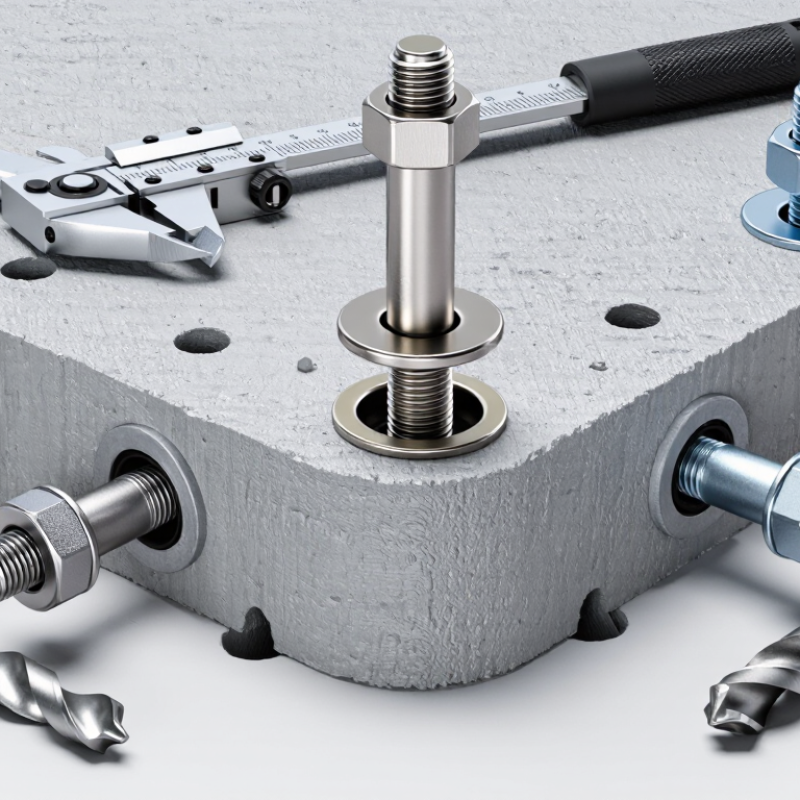
How to Choose Wedge Anchors 7 Tips for Buyers?

Define Wedge Anchors and Their Common Applications

Wedge anchors are mechanical fasteners designed to secure materials to solid concrete. Each anchor has a threaded stud, nut, washer, and expansion clip. When the nut is tightened, the clip wedges against the drilled hole. This creates strong friction and holding power inside the concrete.

They are commonly used for attaching steel columns, handrails, equipment bases, storage racks, and safety barriers. Construction crews also use them for securing wood plates to concrete slabs. They work best in sound, fully cured concrete. They are not suitable for brick, hollow block, or weak concrete unless an engineer approves another solution.

Choosing the right wedge anchor requires more than checking its diameter. Confirm the concrete strength, embedment depth, fixture thickness, and expected load. The hole must match the anchor diameter and reach the required depth. Dust can reduce performance, so cleaning the hole matters. It is a small step.

In field inspections, improper tightening appears often. Too little torque may leave the fixture loose, while excessive torque can damage the concrete or threads. Corrosive environments also require suitable material and protection. Stainless steel may be appropriate near moisture, but the decision depends on exposure and design requirements. The choice is not always obvious. A careful installer checks the substrate, measures twice, and follows verified load data before installation.

Match Anchor Materials to Base Materials and Site Conditions

How to Choose Wedge Anchors: 7 Tips for Buyers

Match the anchor material to both the base material and the jobsite environment. In dry, interior concrete, zinc-plated carbon steel may provide practical corrosion resistance. Damp rooms, coastal air, and chemical exposure demand more careful selection. Stainless steel is often safer, but its grade must suit the exposure.

A mismatched anchor can corrode quietly behind a fixture. That failure is difficult to inspect.

The base material matters just as much. Wedge anchors are designed mainly for solid concrete, not hollow block or weak masonry.

ACI 318-19 requires designers to consider cracked concrete, edge distance, spacing, and embedment depth.

ICC-ES AC193 evaluates mechanical anchors through qualification testing, including tension and shear performance.

ASTM E488/E488M provides standardized methods for testing anchors in concrete and masonry. These references are useful, but field conditions still control results.

Wet drilling, oversized holes, and poor cleaning can reduce holding strength. Dust is not harmless. Follow the specified hole diameter and clean the hole thoroughly before installation.

Near edges, reduce the anchor size or increase spacing when permitted by the design. In chloride-heavy locations, ordinary plated steel may be a poor assumption.

I have seen drawings specify “corrosion-resistant” without naming a material grade. That wording needs review, not guesswork.

Temperature, installation torque, and concrete strength should also match the anchor’s evaluation data.

Choose the Correct Anchor Diameter, Length, and Embedment Depth

Selecting a wedge anchor starts with the load, but diameter alone does not determine performance. Check the fixture holes, concrete strength, spacing, and edge distance before choosing a size. A larger diameter may resist higher tension, yet it can split weak or narrow concrete.

Anchor length must pass through the fixture, washer, and nut while reaching the specified embedment depth. Do not measure only the exposed shaft. Effective embedment begins below the fixture and excludes coatings, shims, or loose surface material. In practice, a thick base plate can make a standard anchor too short. A longer anchor is not automatically safer.

Tips: Match the diameter to approved load data and the fixture hole. Confirm the required embedment depth from project specifications. Drill to the stated diameter and depth, then remove dust carefully. Keep the anchor away from edges and nearby anchors. Tighten it with a calibrated torque wrench when required. A quick visual check is useful, but torque verification is better.

One common mistake is choosing depth by intuition. Concrete may look solid while its surface remains weak or cracked. Recheck the actual hole depth with a probe before installation. Also inspect whether the nut reaches full thread engagement. Small errors matter here. My checklist would include diameter, fixture thickness, effective embedment, hole cleanliness, spacing, edge distance, and tightening method. Drawing details and tested installation data should guide the final choice.

Evaluate Load Capacity, Safety Factors, and Installation Requirements

Choosing wedge anchors starts with the load, not the diameter. Separate tension, shear, and combined loading, then identify concrete strength, thickness, cracking, edge distance, and anchor spacing. ACI 318-19 Chapter 17 requires checks for steel failure, concrete breakout, pullout, pryout, and side-face blowout. One number is never enough.

Use published design values, not ultimate test loads. ICC-ES AC193 evaluates mechanical anchors in cracked and uncracked concrete, with seismic and sustained-tension conditions when applicable. ASTM E488/E488M provides tension and shear test methods for anchor performance. Apply the stated strength-reduction factors and load combinations. Do not casually assume a universal safety factor of four. That shortcut can hide the real failure mode.

Installation changes capacity. Drill to the specified diameter and depth, remove dust, and keep the hole perpendicular. Confirm the concrete has reached its required strength. Maintain the listed edge distances. Tighten with a calibrated torque wrench, using the evaluation report’s torque value. A loose nut may be obvious. A dirty hole is not. I have seen neat calculations fail because installers rushed cleaning. That mistake deserves attention. Recheck embedment, washer seating, and damaged threads before loading the connection. If field conditions differ from the tested assembly, stop and obtain an engineer’s review.

How to Choose Wedge Anchors: Load Capacity and Safety Factors

This screening example assumes a 2 kN service tension load. Required design tension is calculated as service load × safety factor. A higher safety factor increases the required anchor capacity, but the correct value must be selected according to the applicable design standard and project conditions. Final selection must also verify concrete strength, anchor diameter, embedment depth, edge distance, spacing, hole cleaning, installation torque, and all applicable failure modes.

Compare Corrosion Resistance, Certifications, and Total Project Cost

How to Choose Wedge Anchors: 7 Tips for Buyers

Corrosion resistance should match the exposure, not the catalog photograph. For a dry indoor slab, zinc-plated steel may be adequate. Outdoor concrete, coastal air, deicing salts, and chemical rooms demand stronger protection. Hot-dip galvanized or stainless steel options can reduce replacement risk, but coating damage during installation remains possible. ISO 9223 exposure categories help classify atmospheric corrosion, while the NACE IMPACT study estimated global corrosion costs at about $2.5 trillion annually, or 3.4% of global GDP.

Check certification documents before comparing prices. A credible evaluation report should identify concrete strength, cracked-concrete performance, embedment depth, edge distance, and installation torque. ACI 318-19 Chapter 17 provides design requirements for anchors in concrete. ICC-ES AC193 is another useful reference for mechanical anchoring evaluation. Do not accept a certificate with missing test conditions. That shortcut can become expensive.

Calculate total project cost, not unit cost. Include drilling time, cleaning equipment, torque tools, inspection labor, corrosion protection, replacement access, and downtime. Ten cheaper anchors may need deeper installation or more frequent checking. A stainless anchor can cost more upfront. It may still reduce lifecycle expense in chloride exposure. Measure the real substrate first. Old concrete is rarely as uniform as drawings suggest. I sometimes underestimate installation delays, especially when holes collect dust or reinforcing steel blocks the planned position. That deserves a contingency.

How to Choose Wedge Anchors: 7 Tips for Buyers — Compare Corrosion Resistance, Certifications, and Total Project Cost

Tip Buyer Decision Recommended Anchor Type Typical Corrosion Resistance Relevant Standards or Evaluation Documents Indicative Material Cost Index* Best-Fit Application
1 Match the finish to the exposure environment Zinc-plated carbon steel for dry interior conditions Basic protection; not intended for persistent moisture, exterior exposure, or chloride environments ASTM B633 for electrodeposited zinc coatings; verify coating service condition and thickness 1.0× Indoor equipment, dry warehouses, non-corrosive concrete interiors
2 Choose added protection for outdoor or humid locations Hot-dip galvanized carbon steel Thicker zinc coating than electroplating; suitable for many exterior and damp applications when specified correctly ASTM A153/A153M for hot-dip galvanized hardware; confirm coating thickness and installation requirements 1.4–1.8× Exterior canopies, utility supports, covered parking, damp service areas
3 Specify stainless steel where chlorides or chemicals are present AISI 304/316 stainless-steel wedge anchor, subject to manufacturer approval High resistance to atmospheric corrosion; 316 generally provides better chloride resistance than 304 ASTM F593 for stainless-steel bolts and screws; check the complete anchor assembly and applicable design report 3.0–6.0× Coastal structures, wastewater areas, food-processing rooms, chemical-exposure zones
4 Verify concrete and installation conditions before sizing Anchor approved for cracked or uncracked concrete as required Corrosion resistance does not compensate for unsuitable concrete, inadequate embedment, or incorrect hole cleaning ACI 318 anchoring provisions; ACI 355.2 or ICC-ES AC193 evaluation criteria where applicable Project-dependent Structural supports, machinery bases, handrails, seismic or vibration-sensitive installations
5 Demand documented performance, not only a nominal load rating Anchor with a current, applicable evaluation report and published installation data Performance depends on diameter, embedment, concrete strength, edge distance, spacing, and load direction ICC-ES reports, European Technical Assessment under EAD 330232, or project-specified test documentation 1.1–2.0× Commercial construction, public projects, engineered connections, inspected work
6 Compare installation labor and required equipment Standard torque-controlled wedge anchor with compatible drill, brush, vacuum, and torque wrench Correct hole diameter, depth, cleaning, tightening torque, and inspection are essential to reliable performance Follow the product-specific installation instructions and the applicable design standard Labor may exceed anchor price Projects with repetitive installations and controlled site procedures
7 Calculate total project cost, not unit price alone The lowest-cost compliant anchor that meets exposure, load, inspection, and service-life requirements A higher initial price may reduce replacement, corrosion repair, rework, and inspection risk Project specifications, ACI 318, applicable evaluation report, and local building-code requirements Evaluate full life-cycle cost Any project where downtime, access difficulty, or replacement cost is significant

*Indicative material cost index only: zinc-plated carbon steel = 1.0× baseline. Actual prices vary by diameter, length, quantity, material grade, certification, location, and supplier. Load capacity and corrosion life must be confirmed from the applicable engineering documentation rather than inferred from this table.

Article Source:

Go to Top