
7 Best Parking Locks for Cars in 2026

A Parking Lock can add a visible barrier between your car and an open parking space, but the right choice depends on more than its shape. In 2026, buyers can compare manual folding posts, remote-controlled barriers, and connected models with app features. Each design brings different trade-offs. A sturdy-looking arm may still be awkward to operate when rain is falling or your hands are full.

This guide explores seven parking locks for cars, focusing on practical details that matter at home, in shared lots, and in commercial spaces. We consider construction, mounting requirements, power options, controls, visibility, and resistance to everyday weather. Fit matters. Measure your parking space and check the ground surface before choosing a model; concrete, paving, and uneven surfaces can affect installation. Also consider whether the barrier leaves enough clearance for your vehicle and neighboring cars.

Features alone do not guarantee reliable protection. A remote needs dependable power, while a manual lock needs a mechanism you can raise and secure without struggle. No device is foolproof. Even a well-built lock may need regular checks for loose fixings, corrosion, or a weakening battery. Small details count. The best option is the one that suits your space, routine, and maintenance habits—not simply the one with the most impressive specifications.
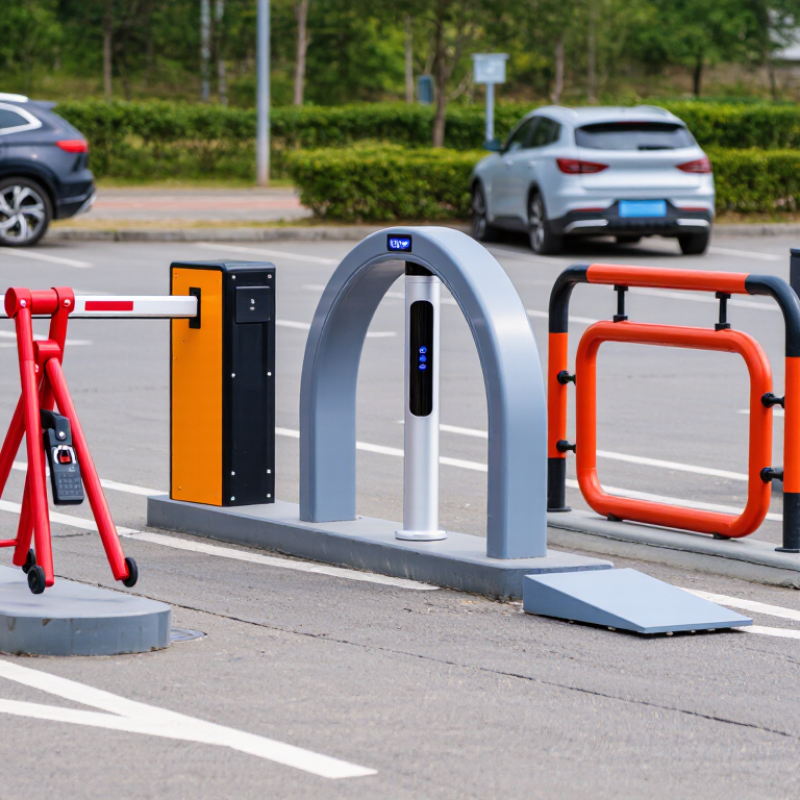
7 Best Parking Locks for Cars in 2026

How Parking Locks Protect Cars and Control Access

A parking lock creates a visible, physical barrier between an open parking space and an arriving vehicle. Raised models block the front or rear of a car; authorized users lower them with a key or remote. This simple step can help control access to a reserved driveway, apartment space, or small fleet area.

The National Insurance Crime Bureau’s 2023 Hot Wheels report recorded 1,020,729 vehicle thefts in the United States, about 1% more than in 2022. That figure shows why layered precautions matter, but it does not prove that parking locks prevent theft.

The barrier works best when it fits the space and is anchored securely to a suitable surface. Check the car’s bumper clearance, the lock’s folded height, and whether pedestrians can see it at night. A lock that scrapes a low bumper or blocks a walkway creates its own problem. Small details matter.

A parking lock controls entry; it does not make a car theft-proof. Pair it with locked doors, a well-lit parking area, and careful key control. Test the release before relying on it, especially after rain or freezing weather. And remember, someone can forget to raise it. Human habits are part of the security system, too.

Key Features to Compare in a Parking Lock

A parking lock should match the space and the way you use it. Measure the gap between your car’s underside and the device before buying; a tall barrier can scrape a low bumper. Check the base dimensions and mounting method, too. A lock anchored into suitable concrete may resist movement better than a lightweight, freestanding model. Fit matters.

Compare the locking mechanism, weather protection, and visible condition. A sealed unit can better withstand rain and grit, while a clear indicator or reflective surface helps you spot the raised arm in dim light. Battery-powered models need a practical charging or replacement routine. The National Insurance Crime Bureau’s 2023 Vehicle Theft Report recorded 1,020,729 vehicle thefts in the United States that year. A parking lock is only one layer of security, not a guarantee. That distinction is easy to overlook.

Tips: Test the lock’s full travel before regular use, and check that it clears your car’s doors and tires. Ask how emergency release works if power fails. Inspect hinges and fasteners for rust or looseness every few weeks. A small oversight—like forgetting to lower the arm—can cause damage, so choose controls you can operate consistently.

Seven Notable Parking Locks for Cars in 2026

Seven notable parking locks in 2026 include fold-down barriers, remote-operated rising posts, key-operated posts, telescopic bollards, wheel clamps, ground-mounted barriers, and chain-linked posts. Each suits a different space. A fold-down barrier sits low when unused, but check that its hinge clears the vehicle’s underside. Remote models are convenient in rain; their batteries still need attention. Key-operated posts are simpler, though keeping the key accessible matters.

Telescopic posts can fit tighter spaces because they retract into a compact housing. Wheel clamps physically restrict a tire, but they take more time to fit and remove. Fixed Bollards can create a clear boundary, while chain-linked posts can mark a wider entrance. Neither is automatically right for every driveway. Measure the parking bay, check the ground beneath it, and confirm the lock will not obstruct pedestrians or nearby vehicles. Installation quality matters as much as the lock itself.

Look for sturdy materials, visible locking points, weather-resistant finishes, and replacement keys or parts. Check how the mechanism works before buying; a stiff post can become irritating during a busy morning. No lock is foolproof. That’s easy to forget. A lock mainly adds a physical obstacle and makes unauthorized access less convenient. I’d also question any choice that depends on frequent charging or a hard-to-find key. Decide what inconvenience you can live with.

Choosing a Lock for Different Parking Spaces

A parking lock should fit the space, not just the vehicle. For a private driveway, a fold-down model can leave room to walk or move bins when the car is away. Measure the car’s front overhang and the lock’s folded height. A low sports car may scrape where a taller vehicle clears easily. Measure twice.

In a shared garage, check the marked bay, turning room, and permission to attach hardware before choosing a surface-mounted lock. Concrete may look solid but still need the right anchors; ask a qualified installer to assess its condition. A lock placed too close to a wall can be awkward to raise. Small detail, big nuisance.

Outdoor spaces need a different check. Rain, grit, and freezing temperatures can stiffen hinges or expose weak coatings, so look for weather-resistant materials and accessible moving parts. If the parking area has no nearby power, a manual lock avoids dependence on charging, though it takes more effort each time. For a narrow bay, compare the lock’s raised width with the space between the tires and neighboring vehicles. Leave enough clearance to operate it without leaning into traffic. A little inconvenience may be acceptable; repeated strain usually is not.

Installation, Operation, and Ongoing Care

A parking lock works best when its position is planned before drilling. Measure the vehicle’s wheel path and leave enough clearance for doors and walking space. Check the surface for cracks, loose paving, or signs of buried services; uncertain conditions deserve a qualified installer’s advice. Follow the lock’s installation instructions, including the specified anchors and tightening sequence.

Measure twice. A rushed mark can leave the unit slightly crooked. It may still operate, but the mismatch is frustrating.

Before each use, make sure the area around the lock is clear. Raise or lower it as directed, without forcing a stiff hinge or mechanism. Keep hands and feet away from moving parts. Small details matter.

Once a month, inspect the anchors, joints, and visible metal for movement, wear, or corrosion. Brush away grit and leaves, then wipe off standing water. For powered models, check the battery and controls according to the manual, especially after cold or wet weather.

A little lubrication may help, but using the wrong product can attract dirt or damage components. If the lock binds, leans, or feels loose, stop using it and investigate rather than tightening parts at random.

A quick check is easy to skip. That is usually when small problems become noticeable.

Go to Top